


In the Palm of Darkness
by Mayra Montero. HarperCollins, 1997. 183 pages, $21
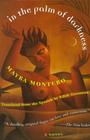
In the Palm of Darkness is a short, pungent novel about frogs and Haiti that displays feeling and knowledge about both subjects. Written by the Cuban novelist Mayra Montero, it is the first of her five books to be translated into English.
As the book opens, the American herpetologist Victor Grigg has arrived in Haiti on a quest to find a specimen of the grenouille du sang, the "blood frog," which was last reported on the Mont des Enfants Perdus in the east of the country. Victor's wife has left him for another woman, and his response is to concentrate even more intensely on his research. The story alternates between sections narrated by Victor and by his Haitian guide Thierry Adrien, interspersed with half-pages detailing the mysterious real-life disappearances of the world's frogs -- including the rapid decline of populations from thousands of individuals to none at all.
Victor's timing is poor. Though it's never said explicitly, his arrival in Haiti in 1992 coincides with the forced exile of President Aristide, during which the thuggish "attachés" of the military regime were crushing popular organizations and resuming their profitable drug trade. The Mont des Enfants Perdus, it turns out, has become a no-go area under the control of the attachés, who force Victor and Thierry to retreat in fear for their lives. Soon Victor decides to search for the frog in another dangerous location -- a second mountain where the attachés are moving in but have not yet driven off everyone else.
As the search continues, Victor and Thierry gain insights into each other's tangled lives. Thierry's monologues sometimes seem addressed to Victor and sometimes only to himself, but they reveal that he understands Victor, his obsessions, and the dangers that face them much better than the scientist could have imagined. Thierry, it turns out, has a detailed knowledge of rare frogs and their habitats. Years before, he had been the guide for another herpetologist who came to a bad end through his irrational desire for a whorish Indian woman named Ganesha. Thierry's own obsessive love, "the grief that never ends," is for Frou-Frou, his mother's cousin and his father's one-time lover. Frou-Frou's son Julien, the guide's half-brother, has grown up to be a notorious attaché, sullen and murderous.
Montero's picture of Haiti under oppression is convincing, and many of the horrors it details -- such as the faceless corpses left by the roadsides -- are well documented. Thierry describes magical rituals and the preparation of poisons with details that echo anthropological works like Wade Davis' Passage of Darkness. Unfortunately, when Montero recounts tales of roving bands of zombies, and a secret society of zombie hunters who track them down and kill them, she reaches needlessly and sensationally beyond the historical record. Even researchers like Davis who believe in the existence of zombies regard them as a rare phenomenon.
Although In the Palm of Darkness is translated by Edith Grossman, the translator of Gabriel Garcia Marquez's recent work, the murky atmosphere of the story is made murkier by what seems to be translation problems. Even the color of the blood frog alternates from blood-red, as one would expect, to purple. Still, from its first intriguing sentence, "A Tibetan astrologer told Martha I would die by fire," this is an eerie, absorbing, and efficiently told tale.
Published in the Harvard Post, December 5, 1997.